It depends on the type. Summer-fruiting raspberries are pruned straight after you finish picking, usually in late summer. You cut the old fruited canes to the ground and tie in six to eight of the strongest new green canes per plant. Autumn-fruiting raspberries are pruned in February, when you cut all the canes down to the ground. If you’re reading this in November, that means autumn types can wait. With summer types, take out any old fruited canes now if you missed them after harvest.
Mixing the two methods up is the most common way to lose a crop. Below we’ll help you work out which type you have, then take you through pruning and tying in each one.
Key takeaways
- Summer-fruiting raspberries (floricanes) fruit on last year’s canes. Prune right after harvest.
- Autumn-fruiting raspberries (primocanes) fruit on this year’s canes. Cut them all to the ground in February.
- Not sure which you have? Look at when they fruited and which canes carried the fruit.
- Tie in summer types on wires. Autumn types are shorter and are easily held between parallel wires.
- Autumn types can also be “double cropped” for a small summer crop.
How to tell summer and autumn raspberries apart
If you’ve lost the label or inherited a raspberry patch, these clues help:


| Clue | Summer-fruiting | Autumn-fruiting |
|---|---|---|
| When they crop | Early to late summer, roughly June to September, depending on variety | Late summer into autumn, from about August, often well into October |
| Which canes fruit | Last year’s canes (brown, woody) | This year’s new canes, at the top |
| Fruit in the first year after planting? | No, usually from the second summer | Yes, in the first year |
| Typical height | About 1.8m (6ft), bushy | Usually 1.2–1.5m (4–5ft), less vigorous |
Crop timings and heights from the RHS raspberry guide.
The quickest test: if you were picking raspberries in September and October from the tips of this year’s green canes, they’re autumn-fruiting. If the crop came in June or July on older, browner canes, they’re summer-fruiting.
Still unsure? Here’s what we’d do this winter. Don’t cut everything down yet. Next summer, watch which canes flower and fruit. If the fruit comes in June or July on older, browner canes, they’re summer-fruiting. If it comes from August on the new season’s green canes, they’re autumn-fruiting.
Golden raspberries: ‘All Gold’, which the RHS suggests for small spaces, is autumn-fruiting. Check your variety name if you have it.
When and how to prune summer-fruiting raspberries
When: straight after you finish harvesting, usually late summer. The RHS also advises a small tidy-up in February.
Summer-fruiting raspberries fruit on one-year-old canes, the ones that grew the previous season. That means each summer you’ll see two sets of canes side by side: the ones carrying fruit, and the new green ones that will fruit next year. The aim is to take out the first set and keep the best of the second.
- Cut all the old, fruited canes right down to ground level. They’re usually darker and woodier, with dried fruit stalks. Sharp bypass secateurs make this much easier.

- Bypass pruner with rolling handle for fresh branches, Twigs, Rose bushes or ornamental plants up to Ø 2.4 cm, Not suitab…
- PowerGear technology: low effort thanks to gear mechanism, Smooth and clean cuts thanks to non-stick coating and precisi…
- Supports the natural movement of the hand thanks to ergonomic rolling handle, Stable and ergonomic PVC-free glass fibre-…
- Choose the strongest new canes. The RHS suggests keeping about six to eight per plant.
- Tie them to your wires, spacing them about 10cm (4in) apart.
- Cut any other new canes down to the ground. Fewer, stronger canes give better fruit than a crowded thicket.
- In February, trim any canes taller than the top wire. The RHS advises looping over and temporarily tying any that grow past the top wire, then in February trimming them back to a bud about 10cm (4in) above it.
Missed it this year? You can still cut out the old fruited canes now. They won’t fruit again, and removing them lets light and air reach next year’s canes.
When and how to prune autumn-fruiting raspberries
When: February.
Autumn-fruiting raspberries crop on canes that grew in the same year, so the job is simple.
- In February, cut all the canes down to ground level.
- Wait for new canes to appear in late winter and early spring. These will carry this year’s crop.
- Thin any overcrowded clumps as they grow, removing the weakest canes so the rest are roughly 10cm (4in) apart, as the RHS suggests.
Why wait until February rather than cutting them now? It’s the timing the RHS gives. Leaving the old canes over winter does no harm, and it’s one job fewer in a cold month.
Double cropping autumn raspberries
If you only have room for one row, the RHS describes a way to get a small summer crop from autumn types as well:
- In February, instead of cutting every cane down, choose six to eight of the strongest per metre of row and cut off just the top part that has already fruited.
- Cut all the other canes to the ground as normal.
- After the half-pruned canes have fruited in summer, cut them to the ground. This year’s new canes then crop in autumn.
The RHS says you get a modest summer crop and a slightly reduced autumn one, but more fruit overall than with normal pruning. Only try it on established plants (two or three years in place). The RHS lists ‘All Gold’ as suitable for double cropping.
Tying in and supports
Good support makes pruning far easier, because you can see which canes are which.
For summer-fruiting raspberries, the RHS recommends posts about 1.8m (6ft) tall with three lengths of strong galvanised wire, 60cm (2ft) apart. A useful trick is to tie this year’s fruiting canes along one side of the wires and the new canes along the other. Then after harvest, you simply clear one side.
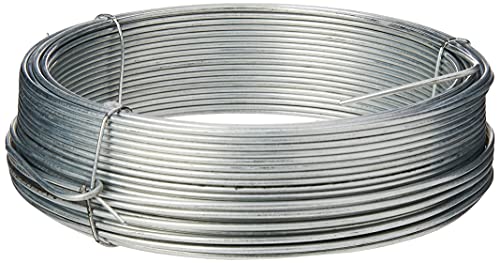
- Pack of 1 x Wire Galvanised 1.6mm x 1/2 Kg (Approximately 30 Metres)
- Typically Used To Provide A Trellis For Climbing Plants
- Chain, Wire & Rope Accessories
For autumn-fruiting raspberries, the RHS suggests posts about 60cm (2ft) tall with parallel wires on either side, which hold the canes upright without tying each one in. It says this fence system also suits summer raspberries in a small space.
In a small garden, you don’t need a row. The RHS suggests two or three plants around a single sturdy post (about 60cm tall for autumn types, 1.8m for summer types), tied in with twine. For a patio, a compact variety such as ‘Ruby Beauty’ can grow in a container at least 40cm wide and 30cm deep, supported with bamboo canes.
Frequently asked questions
When do you prune autumn raspberries in the UK?
In February. Cut all the canes to the ground, and new canes will grow and fruit later in the year.
When do you prune summer raspberries in the UK?
Straight after harvesting, usually in late summer. Cut out the old fruited canes and tie in six to eight strong new canes per plant. In February, trim any that are taller than the top wire.
How do I know if my raspberries are summer or autumn fruiting?
Think about when they cropped and which canes carried the fruit. Summer types fruit in early to late summer on last year’s canes. Autumn types fruit from about August on canes that grew that year.
Do you cut raspberries to the ground?
Autumn-fruiting canes, yes: all of them, in February. With summer-fruiting types, only the old canes that have fruited are cut to the ground. The new canes are kept for next year.
When do you prune golden raspberries?
It depends on the type. ‘All Gold’, the golden variety the RHS suggests, is autumn-fruiting, so it’s pruned in February. If you have a different golden variety, check its label or the supplier’s description.
What to do now
Have a look at your raspberries this week and work out which type they are. If they’re summer-fruiting and the old canes are still there, cut them out and tie in the new ones. If they’re autumn-fruiting, put a note in your diary for February and leave them be until then.
Related posts
- Edible garden and foodscaping ideas
- Raised bed ideas for stylish and easy gardening
- The best organic fertilisers for a healthy vegetable garden
The Plantrella Team
Photo credits
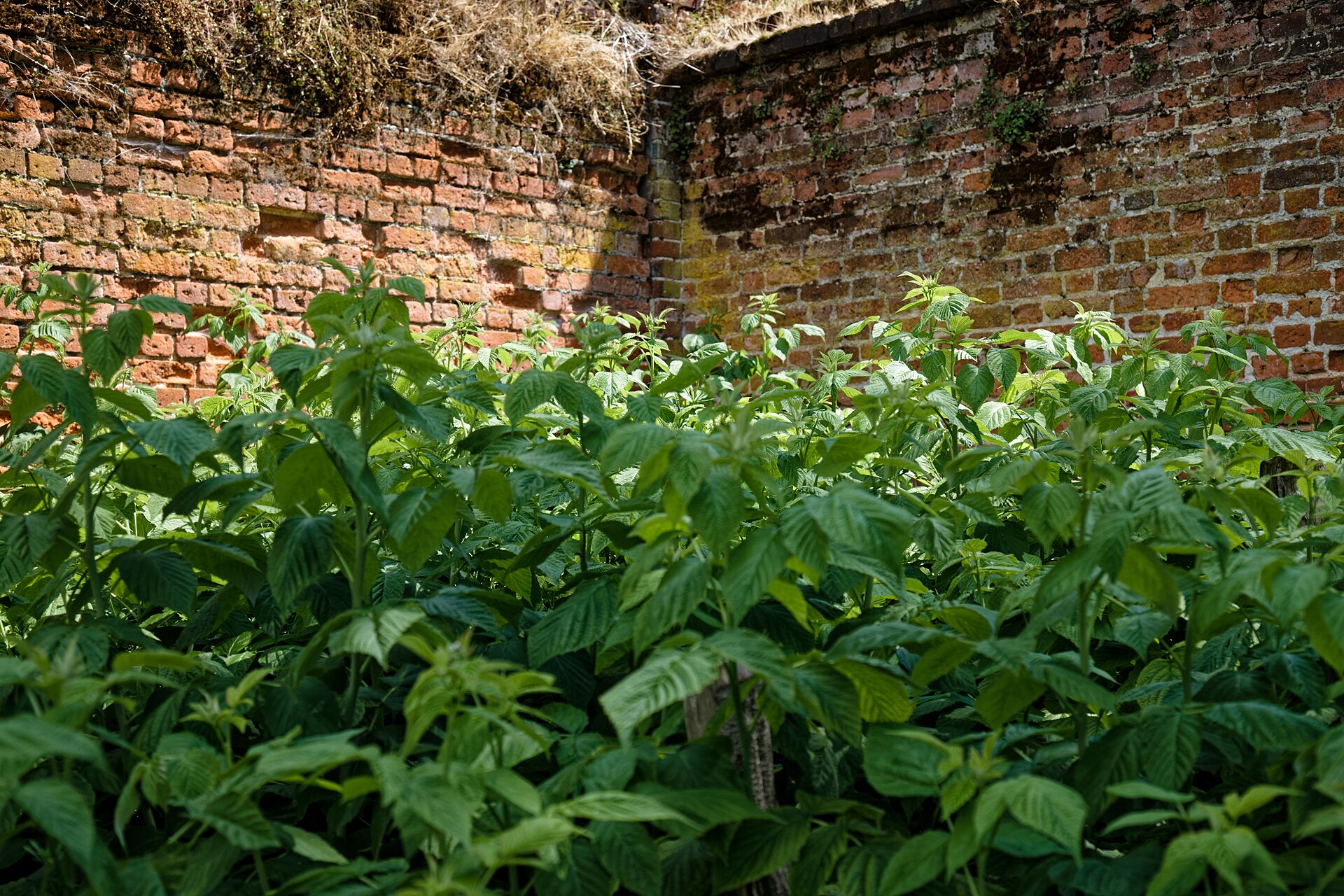
Featured image: “Raspberry plants garden wall Easton Lodge Gardens walled garden Little Easton Essex England 01” by Acabashi, licensed under CC BY-SA 4.0, via Wikimedia Commons.
Sources
- RHS, “How to grow raspberries” (grow your own guide), checked 15 November 2026: https://www.rhs.org.uk/fruit/raspberries/grow-your-own (summer vs autumn types, cropping times, heights, first-year fruiting, pruning summer types after harvest, six to eight canes 10cm apart, trimming in February 10cm above the top wire, pruning autumn types in February, early-summer thinning, double cropping with ‘Joan J’ and ‘Polka’, support systems and dimensions, single post, container size, varieties ‘All Gold’, ‘Autumn Treasure’, ‘Malling Jewel’, ‘Malling Minerva’ and ‘Ruby Beauty’)