
As an Amazon Associate Plantrella earns from qualifying purchases.
The colourful “geraniums” in your summer pots are pelargoniums, and they won’t survive frost. To keep them for next year, move them somewhere light and frost-free before the first frosts. A cool windowsill, porch, conservatory or frost-free greenhouse all work. Keep them on the dry side and cut them back if space is tight. If you have no room for whole plants, you can store them dormant in a frost-free shed or garage, or keep a few rooted cuttings on a windowsill instead.
If frost hasn’t reached you yet, act now. If it already has, check your plants. A light touch may only have marked a few leaves, and they’re often still worth saving.

Key takeaways
- Bedding and patio “geraniums” are pelargoniums. They’re tender and can’t take frost.
- Bring them under cover before the first autumn frosts.
- Method 1: keep them in pots somewhere light, airy and frost-free. Best for a few plants.
- Method 2: store them dormant and bare-rooted. Least reliable, but it takes the least space.
- Method 3: overwinter rooted cuttings on a windowsill. Reliable and compact.
- Water sparingly all winter. Wet, cold compost is the main killer.
Geranium or pelargonium: which have you got?
This is where a lot of overwintering mistakes start, so it’s worth a minute.
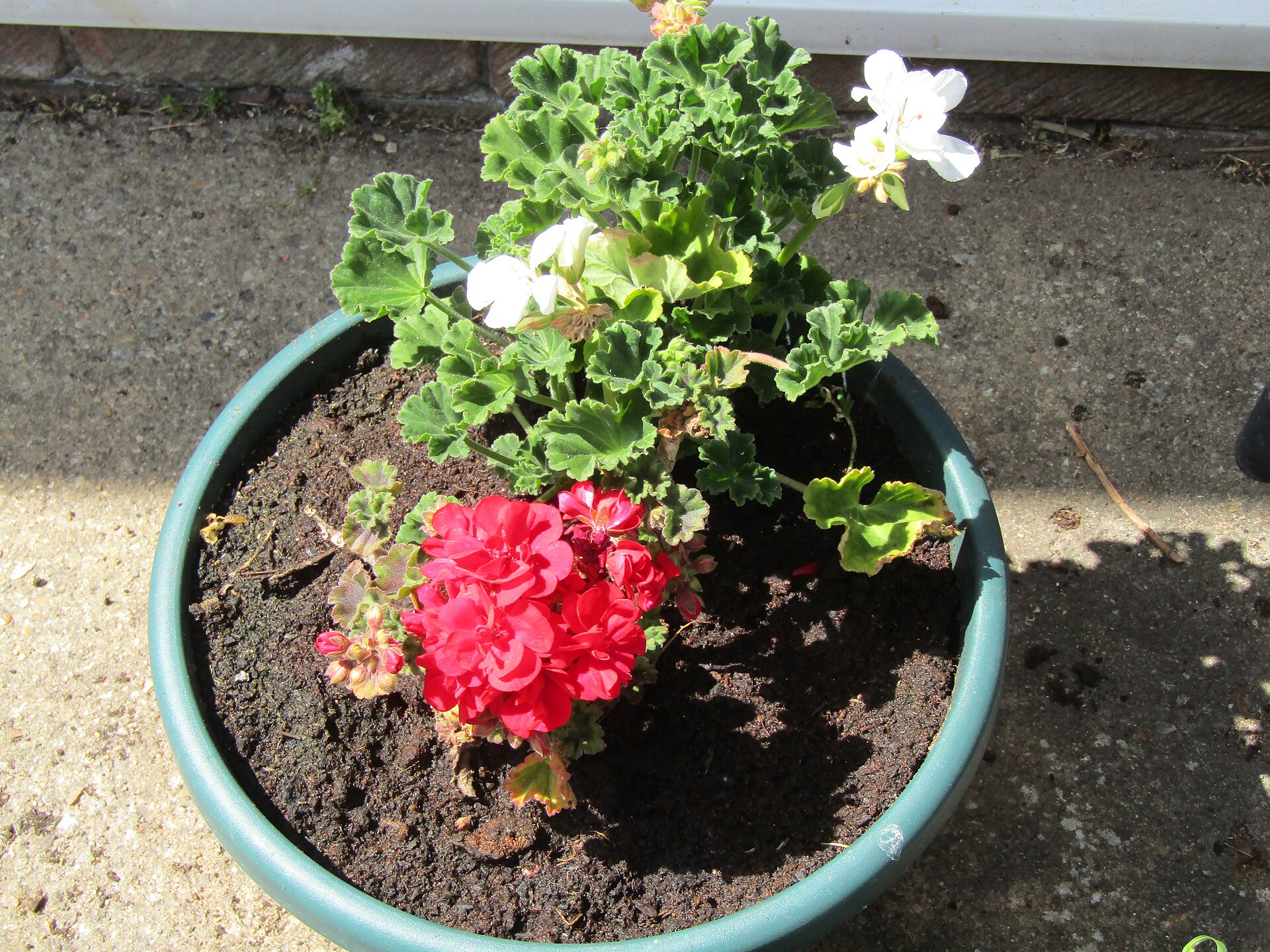
- Pelargoniums are the plants most of us call geraniums: zonal bedding types with bright clusters of flowers, regals with ruffled blooms, trailing ivy-leaved types and scented-leaf types. The RHS describes them as half-hardy perennials that “survive drought with ease, but not frost”, and notes that they’re often called “tender geraniums”. These are the ones that need overwintering.
- Hardy geraniums (often called cranesbills) are true Geranium species, usually grown in borders. The RHS says most are hardy, apart from two island species, G. maderense and G. palmatum. A border cranesbill doesn’t need bringing in.
A quick test: if it came as summer bedding or lives in a pot or hanging basket with chunky, often patterned leaves, it’s almost certainly a pelargonium.
When to bring geraniums in
The RHS advises bringing container plants under cover, and lifting any in the ground, before the first autumn frosts. There’s no single national date. First frosts vary a lot across the UK and from year to year, so watch your local forecast rather than the calendar.
By mid-November, most UK gardeners should already have their pelargoniums under cover or be about to move them. If frost has nipped the leaves, pick off the damaged ones and get the plant inside. If the stems have gone soft and black right down to the base, it’s unlikely to recover.
Method 1: Bring them indoors in their pots
This is best for a handful of plants and anyone with a bright, cool spot. The RHS steps, in brief:
- Move pots under cover before the first frosts. Lift any plants growing in the ground and pot them up in John Innes No. 1 compost.
- Cut back if you’re short of space. The RHS suggests trimming plants back to about 10cm (4in). This also discourages weak, soft growth over winter.
- Choose a light, airy, frost-free spot. A conservatory, porch, cool spare room windowsill or frost-free greenhouse is ideal.
- Water sparingly. Plants still in leaf may need a little water if they start drying out, so check them about once a week. Cut-back plants need barely any water until spring.
- Give them air. The RHS says poor air circulation and damp conditions encourage grey mould, so open a window or vent when the weather allows.
- Repot in mid-spring, then harden off and move outside once the risk of frost has passed.
Many pelargoniums will keep flowering at 7–10°C, according to the RHS. If you keep them growing like this, feed them once a month rather than fortnightly.

- Unique combination of 14 vital minerals for maintaining plants growth and health
- Ideal for all young plants and root cuttings
- Special balanced nutrient mix feeds for up to 6 weeks
Method 2: Store them dormant (bare-root or “paper bag” method)
This is for when you have lots of plants and no windowsill space. The RHS calls this the least reliable method. It suits varieties with tough, woody stems, so treat it as a gamble rather than a guarantee.
- Lift the plants before the first frosts and shake the soil or compost off the roots.
- Let them dry off. Lay them in crates or on a bench somewhere frost-free until the leaves and stems dry.
- Wrap or hang them. Wrap each plant in newspaper, or hang them upside down from the roof of a shed or garage. It must stay frost-free. (This is the method behind the popular “paper bag” searches.)
- Check them in early spring. Keep any that show signs of life. Soak the roots for a few hours, pot them up, cut all stems back to about 10cm and keep them somewhere warm and bright.
- Harden off and plant out once frosts are over.
A garage that drops below freezing in a cold snap will kill dormant plants. If you’re not sure yours stays frost-free, a max-min thermometer left there for a week or two will tell you. It’s the simplest bit of kit we know for this job.

- Displays the current maximum and minimum
- Stylish optics through the noble design
- Suitable for indoor as well as outdoor use
Method 3: Overwinter cuttings instead of whole plants
The RHS calls cuttings more reliable than storing plants dormant. They take up far less room, so they suit soft-stemmed zonal pelargoniums especially well.
The ideal time to take pelargonium cuttings is late summer, and the RHS says softwood cuttings can be taken from spring to autumn. In mid-November, the realistic way to use this method is to overwinter cuttings you’ve already rooted. You can also bring one parent plant in under Method 1 and take fresh cuttings from it in spring.
If you have rooted cuttings:
- Keep them in trays or small pots of compost on a well-lit indoor windowsill.
- Water sparingly, letting the compost dry out between waterings.
- Start feeding in late winter with a balanced liquid feed. In spring, pinch out the shoot tips to make bushier plants.
- Pot them into individual 9cm pots in mid-spring, then harden off and plant out after the last frost.
Winter problems to watch for
- Rot and grey mould. Damp, still air and wet compost are the main causes. Water less and ventilate more.
- Leggy growth. This is a sign of too little light. Move plants to a brighter spot, and cut them back in spring.
- Vine weevil. The RHS notes that the roots of container plants are prone to vine weevil larvae damage. If a plant wilts in moist compost, tip it out and check the roots for C-shaped white grubs.
Frequently asked questions
Can geraniums survive winter outside in the UK?
Pelargoniums (bedding geraniums) won’t survive frost, so in most UK winters they need to come under cover. Hardy border geraniums (cranesbills) can stay outside.
How do you overwinter geraniums in pots?
Move the pots somewhere light, airy and frost-free before the first frosts. Cut back to about 10cm if space is tight, and water only sparingly until spring.
How do you overwinter geraniums in paper bags?
Lift the plants before frost, shake off the soil, let them dry, then wrap them in newspaper or hang them upside down somewhere frost-free. Check them in spring. It’s the least reliable method, so expect some losses.
Can you overwinter geraniums in a cold greenhouse?
Only if it stays frost-free. An unheated greenhouse can still freeze in a cold snap, so add insulation or a frost-free heater, or move the plants indoors during hard frosts.
Can geraniums be kept indoors over winter?
Yes. A cool, bright windowsill is ideal. Keep them on the dry side and don’t feed them more than about once a month.
What to do now
Check tonight’s forecast. If frost is on the way, move your pelargoniums under cover today and decide which method fits the space you have. If you’re keen to keep the rest of your pots safe this winter too, our guide to protecting potted plants from frost covers fleece, wrapping and where to move containers.
Related posts
- How to protect potted plants from frost and storms (UK)
- Winter container plants: 15 easy picks for UK pots
- Best low-maintenance patio plants
The Plantrella Team
Some links on this page are affiliate links. If you buy through them, Plantrella may earn a small commission at no extra cost to you. As an Amazon Associate we earn from qualifying purchases. Prices and availability shown in the product boxes come from Amazon and can change.
Photo credits
Featured image: “-2020-06-04 Geraniums (Pelargonium × hortorum), Trimingham, Norfolk” by Kolforn, licensed under CC BY-SA 4.0, via Wikimedia Commons.
Sources
- RHS, “How to grow pelargoniums” (growing guide), checked 15 November 2026: https://www.rhs.org.uk/plants/pelargonium/growing-guide (half-hardy, not frost-hardy, “tender geraniums”, types, all three overwintering methods and their reliability, John Innes No. 1, cut back to 10cm, 7–10°C flowering, monthly feeding in winter, ventilation, vine weevil)
- RHS, “How to grow geraniums” (hardy geraniums), checked 15 November 2026: https://www.rhs.org.uk/plants/geranium/growing-guide (most geraniums hardy apart from G. maderense and G. palmatum)