

Once the summer bedding has gone over, a lot of patios end up with a row of empty pots and a bit of sad, bare compost. It doesn’t have to be that way. The right winter container plants will keep your pots looking full, green and even colourful from November right through to the first spring bulbs.
I love doing my winter pots. There’s less to fuss over than in summer, the plants are tough, and a couple of well-planted containers by the back door make a grey January morning feel a lot more cheerful. Here are the plants I rely on for small UK gardens, patios and balconies, a few simple planting recipes, and how to keep everything going until spring.
When to plant winter containers
The best time is from late September to mid-November, while the compost is still a little warm and the roots can settle before the really cold weather arrives. Garden centres are full of winter bedding and small evergreens at this time of year, so you’ll also have the best choice.

You can still plant in December if you missed the window. Pick plants that are already well grown and in flower or bud, because they won’t put on much new growth until the days lengthen. It’s also the perfect time to tuck a layer of spring bulbs underneath, which I’ll come back to below.
The best winter container plants for UK pots
A good winter pot usually has three parts: something evergreen for shape, something leafy to fill the gaps, and something that flowers or carries berries. Here are the fifteen plants I come back to every year, grouped by the job they do.
Evergreens for structure
- Skimmia japonica ‘Rubella’: my favourite winter pot plant. It holds clusters of deep red buds all winter, then opens scented white flowers in spring. Happiest in part shade, which makes it ideal for a north-facing front door.
- Euonymus fortunei: tough, compact and cheerful. Varieties such as ‘Emerald ‘n’ Gold’ and ‘Emerald Gaiety’ have variegated leaves that brighten a gloomy corner, and they grow in sun or shade.
- Dwarf conifers: a small Picea glauca ‘Conica’ or a golden Thuja makes a neat centrepiece and looks wonderfully festive in December. Plant it out in the garden or move it into a bigger pot when it outgrows the display.
- Sarcococca (Christmas box): plain glossy leaves for most of the year, then tiny white flowers in mid-winter with a scent you can smell from metres away. Put it near a door or path so you actually enjoy it.
Foliage to fill the gaps
- Heuchera: available in almost every colour from lime green to deep plum, and most keep their leaves all winter. Two or three heucheras around a skimmia is about the easiest winter pot there is.
- Carex: evergreen sedges such as ‘Evergold’ or ‘Everest’ add a fountain of fine leaves and a bit of movement. They’re happy in sun or part shade and don’t mind a windy balcony.
- Small-leaved ivy: trailing ivy softens the edge of a pot and hides the rim. It’s cheap, almost indestructible and you can plant it out in the garden in spring.
- Black mondo grass (Ophiopogon planiscapus ‘Nigrescens’): near-black grassy leaves that make pale flowers and silver foliage really stand out.
Heucheras are the plants I’d buy first if I was starting from scratch. A mixed pack gives you a range of leaf colours to play with across several pots, and any leftovers can go into a shady border.

- COLOURFUL FOLIAGE: These garden plants offer a wide range of foliage colours, from red and purple to vivid green and sil…
- YEAR-ROUND INTEREST: The vibrant and varied foliage of these live plants remains attractive throughout the year. This en…
- GROWTH AND SPREAD: Our outdoor potted plants arrive at a height of 15-40 cm, including the 9 cm pot, making it perfect f…
Flowers for winter colour
- Winter pansies and violas: the backbone of winter bedding. Violas are smaller but tougher and flower on and off all winter in mild spells, then put on a big show in March. Keep picking off the dead flowers and they’ll keep going.
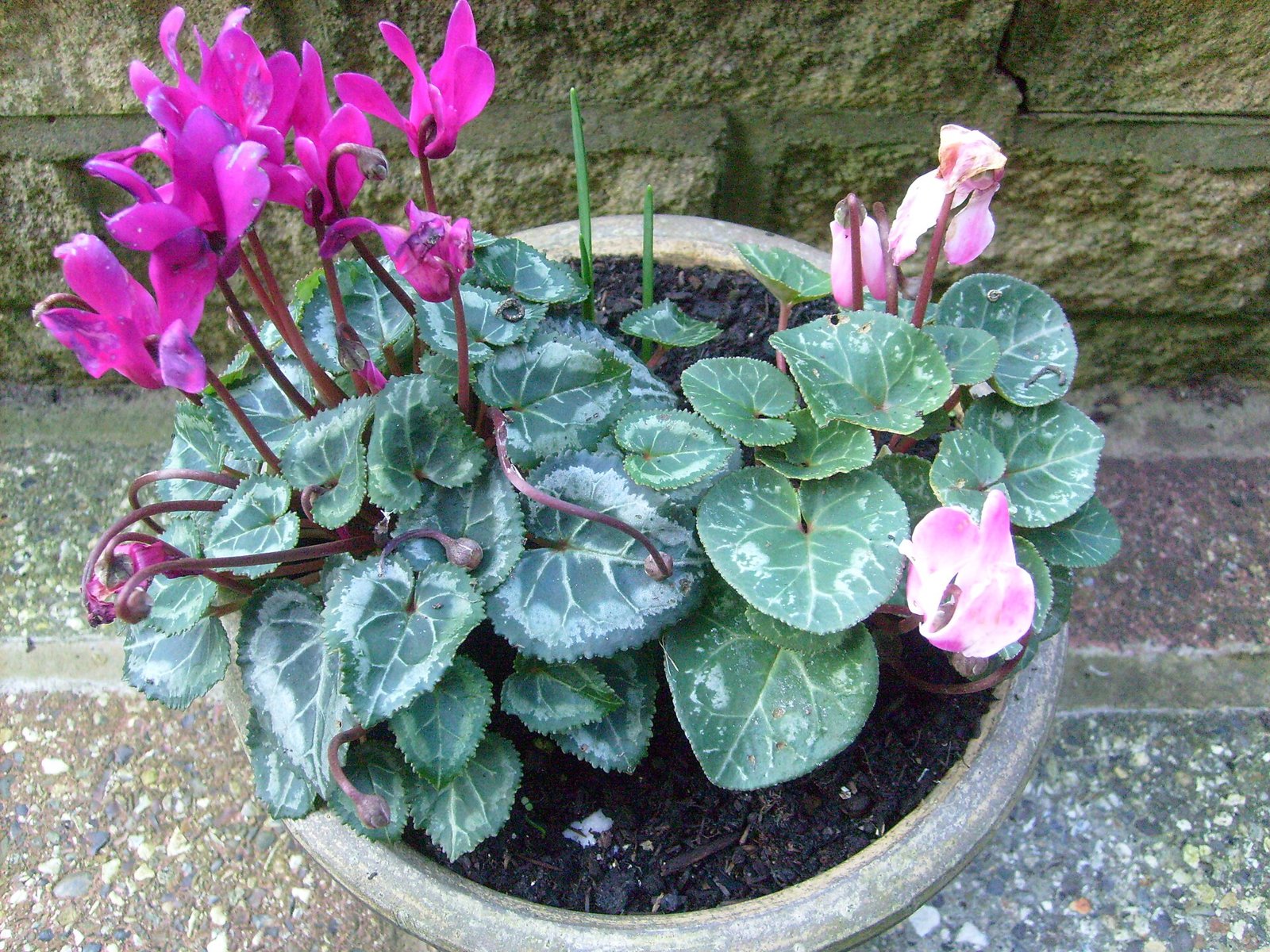
- Cyclamen: the big florist cyclamen sold in autumn give instant colour and usually last until the new year in a sheltered spot. For something truly hardy, look for Cyclamen coum or Cyclamen hederifolium, which come back year after year.
- Winter-flowering heathers: Erica carnea and Erica x darleyensis flower from December to April and, unlike many heathers, they’re happy in ordinary multipurpose compost. Bees love them on mild days.
- Hellebores: Christmas roses (Helleborus niger) and the newer compact hybrids flower from December onwards. Give them a big pot, as they don’t like being cramped.
- Primroses and polyanthus: they start flowering in late winter and carry the pot on into spring. Wild primroses are lovely in a shady corner and good for early bees.
Berries and bold leaves
- Gaultheria procumbens: a low, spreading evergreen with shiny red berries that last all winter. It needs ericaceous (lime-free) compost, so it’s perfect paired with a skimmia, which likes the same.
- Ornamental cabbage and kale: big frilly rosettes in pink, purple and cream that actually get brighter after a frost. They look amazing for a few months, then tire by February.
Three easy winter pot recipes
If you’d rather not start from a blank page, these are three combinations I’ve had good results with. Each one fits a pot around 35 to 40cm wide.
| Spot | Centre | Around the edge | Underneath (bulbs) |
|---|---|---|---|
| Shady front door | Skimmia japonica ‘Rubella’ | Two heucheras, white cyclamen and trailing ivy | Dwarf narcissus ‘Tête-à-Tête’ |
| Sunny patio | Dwarf conifer or Carex ‘Everest’ | Violas, winter heather and black mondo grass | Crocus and dwarf tulips |
| Windy balcony or window box | Euonymus fortunei | Carex ‘Evergold’, violas and ivy | Iris reticulata or muscari |
Planting bulbs underneath is the trick that makes a winter pot really earn its place. The winter plants keep the pot looking good while the bulbs root below, and in spring the shoots come up through the gaps. If you have deeper pots, my guide to planting tulips in pots and making a bulb lasagne shows how to layer bulbs for colour from February to May.
How to plant a winter container
- Start with a pot that has proper drainage holes. Wet compost is the biggest killer of winter pots, far more than cold.
- Use peat-free multipurpose compost mixed with a few handfuls of grit, or a loam-based compost such as John Innes No. 2 for larger pots. Use ericaceous compost if you’re growing skimmia, gaultheria or calluna heathers.
- If you’re adding bulbs, put them in first at the right depth and cover them with compost.
- Water the plants in their nursery pots an hour before planting, then arrange them on top of the compost while still in their pots so you can see how they look.
- Plant them closer together than you would in summer. They won’t grow much over winter, so a full pot from day one looks far better.
- Firm the compost gently, leave a gap at the top for watering, and water well.
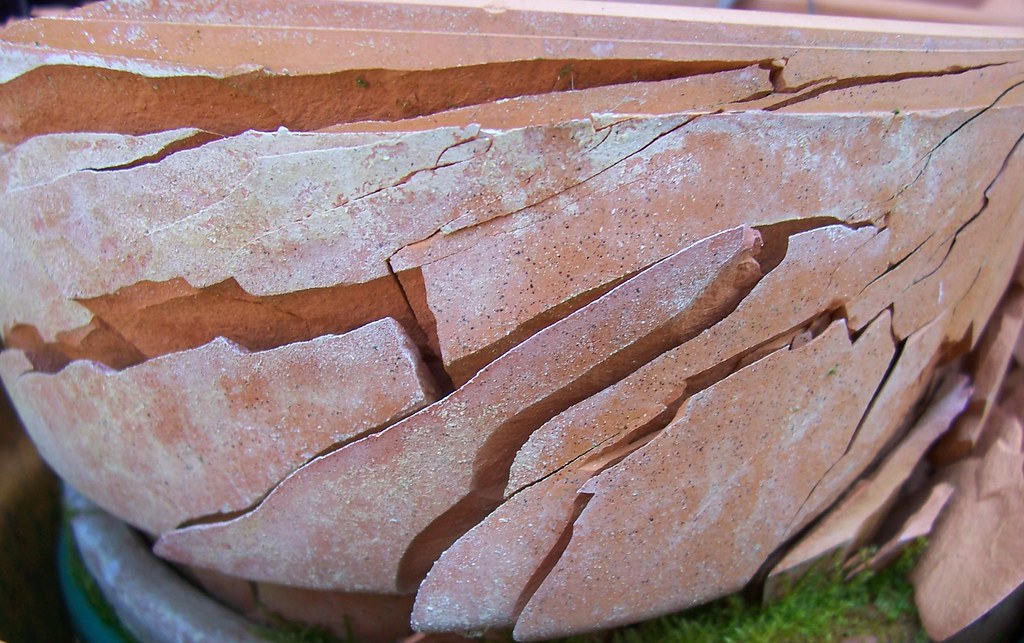
Finally, lift the pot onto feet so water can drain freely from the base. It makes a big difference in a wet British winter and helps stop terracotta and glazed pots from cracking when they freeze.


Choosing pots that survive winter
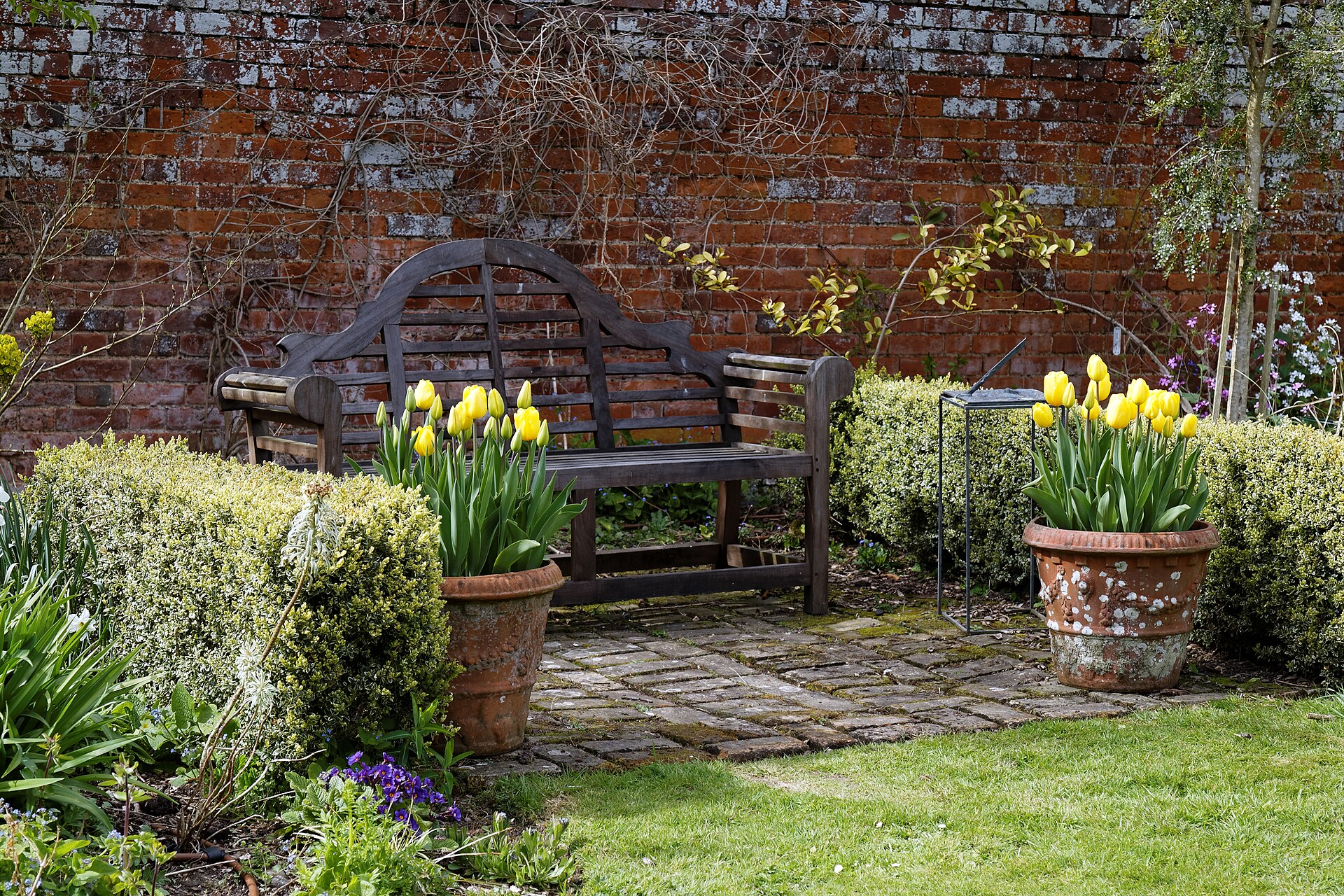
Not every pot that looked lovely in July will cope with a UK winter. When water soaks into the walls of a porous pot and then freezes, it expands and can crack or flake the surface. A few things help:
- Look for frost-proof or frost-resistant labels. Good-quality terracotta, glazed stoneware, fibreclay, plastic and wood all do well.
- Go a little bigger. Larger pots hold more compost, so the roots are better insulated and the compost doesn’t freeze solid as quickly.
- Think about weight on balconies. Lightweight fibreclay or plastic troughs are much easier to move and safer on a balcony. My roof terrace and balcony garden ideas have more tips on planting up small high-level spaces.
- Group pots together. A cluster of containers against a house wall shelters itself and looks more generous than pots dotted about.
Looking after winter pots
Winter containers are low-maintenance, but they’re not no-maintenance. A few minutes a week keeps them looking fresh.
- Water sparingly. Pots out in the open often get enough rain, but those under eaves or on a covered balcony can dry out surprisingly fast. Check with your finger and water only when the top few centimetres are dry, ideally in the morning.
- Deadhead regularly. Pinch off faded pansy, viola and cyclamen flowers to keep new buds coming.
- Clear fallen leaves. Wet leaves sitting on the crowns of violas and heucheras can cause rot.
- Don’t feed until spring. Most plants are barely growing in winter. Start a gentle liquid feed in March as things wake up.
The roots of plants in pots are far more exposed than those in the ground, so a long, hard freeze can still do damage. Move pots closer to the house, wrap tender ones and raise them off cold paving when a cold snap is forecast. I’ve put everything I do in my guide on how to protect potted plants from frost, and the RHS has useful advice on preventing winter damage too.
Winter container plants for shade
A shady patio or a north-facing front step is actually a good place for winter pots, because the compost doesn’t swing between frozen and thawed as often. Skimmia, sarcococca, euonymus, heuchera, ivy, hellebores, primroses and hardy cyclamen all cope well with shade.
Hardy evergreen ferns are another great choice. The soft shield fern (Polystichum setiferum) and the hart’s tongue fern (Asplenium scolopendrium) keep their fronds all winter and look beautiful with white cyclamen tucked around them. The RHS lists both in its winter container planting ideas.

- Mixed Fern Collection – A beautiful selection of 4 outdoor fern plants chosen for their varied foliage, texture and gard…
- Perfect for Shade – These shade loving ferns thrive in areas where many other plants struggle, making them perfect for n…
- Ideal for borders, pots & woodland gardens – Versatile outdoor plants suitable for garden beds, shaded pathways, patio c…
What to do with winter pots in spring
Once the bulbs are over and the weather warms up, it’s time to rethink. The evergreens, heucheras, carex and ferns can stay in their pot for a year or two, or be planted out in the garden. Violas often keep flowering until May, so leave them until they start to look leggy. Then refresh the top layer of compost and add your summer plants.
If you’d like containers that look good with less effort all year round, have a look at my low-maintenance plants for small UK gardens and patios. For summer ideas, my seasonal patio styling guide picks up where winter pots leave off, and you’ll find more planting advice in my plants and plant care guides.
Frequently asked questions
What can I plant in pots for winter in the UK?
Good choices include skimmia, euonymus, heuchera, carex, ivy, violas, pansies, cyclamen, winter heathers, hellebores and primroses. Mix an evergreen for structure with foliage and flowers for the best display.
When should I plant winter containers?
Late September to mid-November is ideal, while the compost is still warm enough for roots to settle. You can still plant in December using well-grown plants.
What winter container plants grow in shade?
Skimmia, sarcococca, euonymus, heuchera, ivy, hellebores, primroses, hardy cyclamen and evergreen ferns all do well in pots in shade.
Do winter pots need watering?
Yes, but not often. Check pots under eaves or on covered balconies, and water only when the top few centimetres of compost feel dry.
Can I put spring bulbs in my winter pots?
Yes. Plant the bulbs first, then put your winter plants on top. The bulbs grow up through the gaps in spring for a second display.
Final thoughts
Winter pots are one of the cheapest, easiest ways to keep a small garden feeling cared for when everything else has gone quiet. Pick one evergreen you love, add a few leafy fillers and some violas or cyclamen, and give the whole thing good drainage. Do that and you’ll have something lovely to look at every time you open the back door, right through to spring.
Featured image: “Assorted Cyclamen in pot” by Mrmatiko, licensed under CC BY-SA 3.0.
This post contains affiliate links. If you buy through them, Plantrella may earn a small commission at no extra cost to you. Prices change often, so check the latest price before you buy.