

November is my favourite time for planting tulips. The garden is winding down, the first frosts are on the way, and there’s something very satisfying about tucking a few bags of bulbs into pots knowing they’ll be the first real burst of colour on the patio next spring.
Tulips are one of the best bulbs you can grow in containers. They’re happy in a pot for a season, they don’t mind a small space, and you can move them to wherever they look best when they flower. If you only have a patio, a balcony or a front step, tulips in pots are the easiest way to get that spring display. Here’s how I plant them, and how to layer them into a bulb lasagne so one pot keeps flowering from March right through to May.
When to plant tulips in pots
Plant tulips later than most spring bulbs. Daffodils, crocus and muscari go in from September, but tulips are best planted in November, once the weather has turned properly cold. Cooler compost helps reduce the risk of tulip fire, a fungal disease that spoils the leaves and flowers, and it stops the bulbs sending up soft growth too early.

If you miss November, don’t worry. Tulips planted in pots in December, or even early January, will still flower, just a little later and sometimes a little shorter. Just make sure the bulbs are still firm. Soft, mouldy or shrivelled bulbs are best thrown away.
Choosing the right pot
Almost any container will do, as long as it drains well and is deep enough. These are the things I look for:
- Depth: at least 30cm deep for a single layer of tulips, and 40cm or more for a bulb lasagne. Wider pots are more stable on a windy patio too.
- Drainage holes: tulip bulbs rot quickly if they sit in wet compost all winter. If a pot has one small hole, drill a couple more.
- Frost-proof material: glazed or cheap terracotta can crack when wet compost freezes. Look for pots labelled frost-proof, or use plastic, fibreclay or wood.
- Weight on balconies: if you’re gardening on a balcony, a lightweight pot and shorter tulips make life much easier.
Raise the pot slightly off the ground so water can drain freely from the base. This makes a real difference in a wet British winter, and it helps stop pots cracking too. I use simple pot feet for this.

- SIMPLIFY GARDENING FOR PLANTS & FLOWERS – Prop up plants, flower pots and garden items above lawns, patios, and decking …
- A HEAVYWEIGHT CHAMP – At 35g per piece / 700g per pack, our pot risers are often 2-3x the average weight of the lighter …
- DISCREET & COMPLIMENTARY – No longer fear breaking or tripping over ceramic feet and stands, our feet remain discreetly …
The best compost for tulips in pots
Tulips aren’t fussy, but they do need compost that drains. I use peat-free multipurpose compost mixed with a few handfuls of horticultural grit, roughly three parts compost to one part grit. A loam-based compost such as John Innes No. 2 is also a good choice, especially for bigger pots that need a bit of weight to stay upright.
Put a layer of crocks or broken polystyrene in the bottom if your compost tends to stay wet, but don’t fill the pot with it. The bulbs need the depth more than the drainage layer does.
How to plant tulips in pots, step by step
- Fill the pot with compost to about 15 to 20cm below the rim.
- Set the bulbs on the compost with the pointed end facing up. In a pot you can plant them much closer than in a border, almost touching but not quite. A 30cm pot will take around 12 to 15 bulbs.
- Cover with more compost so the bulbs are buried at roughly two to three times their own height, which is usually 15 to 20cm deep.
- Firm the compost gently and leave a few centimetres at the top for watering.
- Water once, thoroughly, then let the pot drain.
- Label the pot. By March you’ll have completely forgotten what you planted, I promise.
Squirrels love freshly planted tulip bulbs. If they’re a problem in your garden, lay a piece of chicken wire over the top of the compost until the shoots appear, or top the pot with a layer of grit, which seems to put them off.
How to make a bulb lasagne
A bulb lasagne is simply a pot planted with layers of different bulbs, one on top of the other. Each type flowers at a different time and the later ones grow up through the earlier ones, so you get weeks of colour from a single pot. It’s perfect for a small patio or balcony where every container has to work hard.
The rule is simple: the biggest, latest-flowering bulbs go at the bottom, and the smallest, earliest ones go at the top. For a pot around 40cm deep, I’d plant it like this:
| Layer | Depth | What to plant | Flowers |
|---|---|---|---|
| Bottom | About 25cm | Late tulips, such as ‘Queen of Night’, ‘Menton’ or ‘Ballerina’ | Late April to May |
| Middle | About 15cm | Daffodils such as ‘Tête-à-Tête’, or early tulips | March to April |
| Top | About 8cm | Crocus, muscari or Iris reticulata | February to March |
- Put a few centimetres of compost in the bottom of the pot, then set out the tulips and cover them with compost.
- Add the middle layer of bulbs, placing them between the ones below rather than directly on top. Cover with compost.
- Finish with the small bulbs, cover them, firm gently and water well.
Don’t worry about the shoots finding their way. Bulbs are very good at growing round each other. If you’d like a pot that looks good straight away, plant a few violas or a small heuchera on top. They’ll flower through winter while the bulbs are getting going underneath.
Good tulips for pots
Most tulips are happy in containers, but some are especially good. These are a few of my favourites:
- ‘Ballerina’: a lily-flowered orange tulip with a lovely scent, and it flowers late, so it’s great for the bottom of a lasagne.
- ‘Queen of Night’: a deep, velvety purple, almost black. It looks wonderful with white or pale pink tulips.
- ‘Apricot Beauty’: soft apricot-pink and early to flower. Lovely by a front door.
- ‘Purissima’: a reliable creamy white that comes back better than most.
- ‘Red Riding Hood’: a short tulip with striped leaves. Ideal for windy balconies and window boxes.
Looking after tulips in pots over winter
Once they’re planted, tulips don’t need much from you. The main job is keeping the compost from getting waterlogged. Leave pots out in the open where they’ll get the rain, and only water if the compost feels dry a few centimetres down, which mostly happens with pots sheltered under eaves or on a covered balcony.
Tulip bulbs are hardy and need a cold winter to flower well, so there’s no need to bring the pots in. Move them closer to the house if a really hard frost is forecast, and group pots together for shelter. I’ve written a full guide on how to protect potted plants from frost and winter storms if you want to keep the rest of your containers safe too.
What to do after tulips have flowered
Snap off the faded flower heads so the plant doesn’t waste energy making seed, but leave the leaves to die back naturally for about six weeks. Give the pot a liquid feed every couple of weeks while the leaves are still green.
Tulips in pots rarely flower as well in their second year, so I treat most of them as a one-season treat and plant fresh bulbs each autumn. Once the leaves have yellowed, you can lift the bulbs and plant them out in a border, where some will keep flowering for years. That frees up the pot for summer bedding.
If you’re planning more containers, have a look at my low-maintenance plants for small UK gardens and patios, or browse my plants and plant care guides. For ideas on where to put all those pots, my creative patio ideas for small UK gardens and roof terrace and balcony garden ideas are a good place to start.
Frequently asked questions
When is the best time to plant tulips in pots?
November is ideal in the UK. You can still plant them in December or early January, as long as the bulbs are firm and healthy.
How deep should I plant tulip bulbs in pots?
Plant them two to three times their own height deep, which is usually 15 to 20cm. In a bulb lasagne, the tulips go in the bottom layer at about 25cm.
How many tulip bulbs can I put in a pot?
In a pot you can plant tulips almost touching. A 30cm pot will take around 12 to 15 bulbs.
Do tulips in pots come back every year?
They often flower less well in their second year in a pot. Most people plant fresh bulbs each autumn and move the old ones into a border.
Should I water tulip bulbs after planting?
Yes, water them well once after planting. After that, only water if the compost is dry a few centimetres down, as wet compost can make the bulbs rot.
Final thoughts
An hour spent planting tulips on a grey November afternoon is one of the best investments you can make in a small garden. Pick a good deep pot, give the bulbs compost that drains, and then forget about them until the first green tips appear. Come April you’ll be very glad you did.
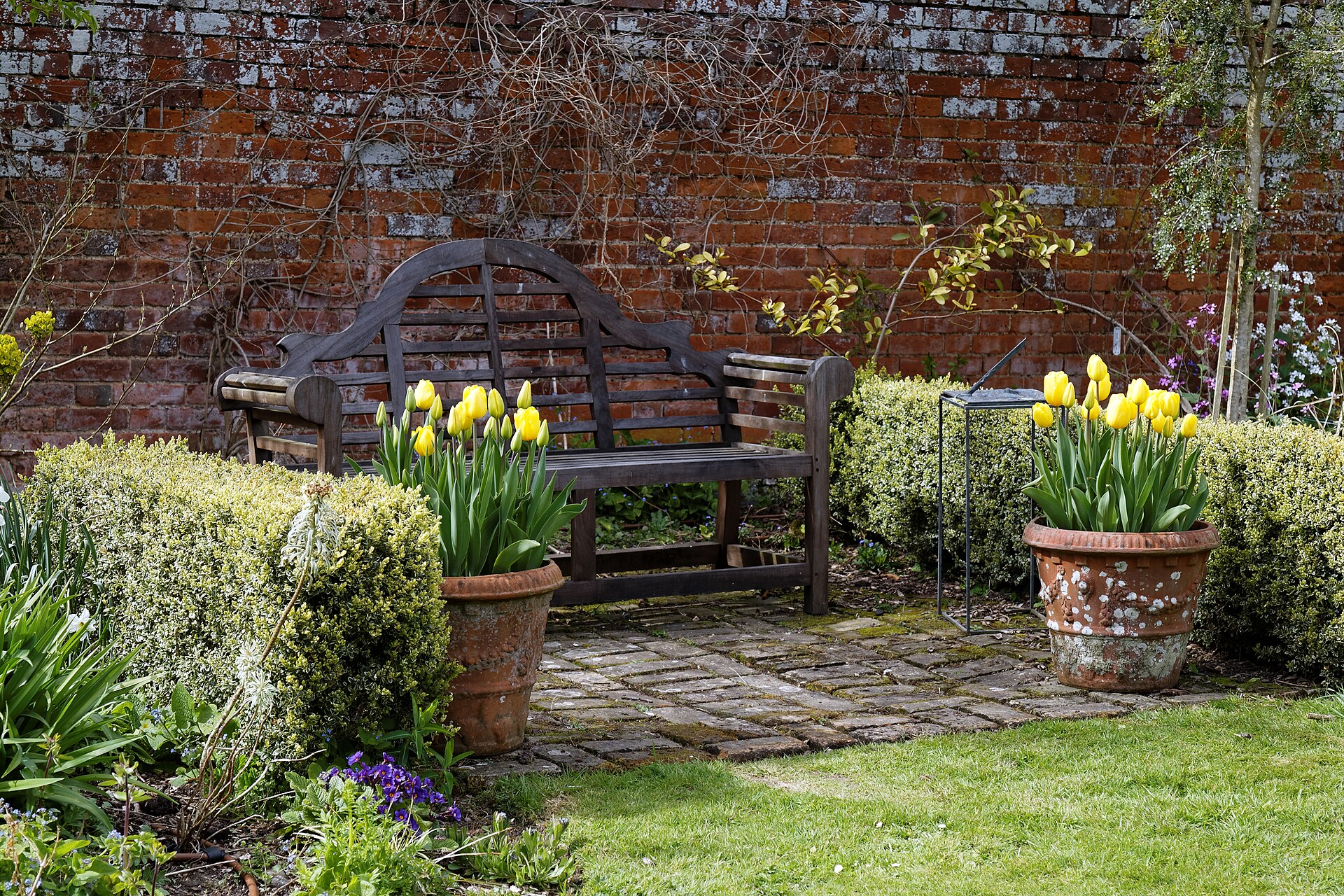
Featured image: “Feeringbury Manor, Lutyens bench and tulips, Feering, Essex” by Acabashi, licensed under CC BY-SA 4.0.
This post contains affiliate links. If you buy through them, Plantrella may earn a small commission at no extra cost to you. Prices change often, so check the latest price before you buy.